Ever scroll through Monterey listings and wonder why one home feels unmistakably local while another looks borrowed from a different era? That layered look is part of what makes Monterey so compelling. If you are buying, selling, or simply trying to understand what gives the city its visual identity, knowing the key historic home styles can help you read a property more clearly. Let’s dive in.
Monterey’s layered architectural identity
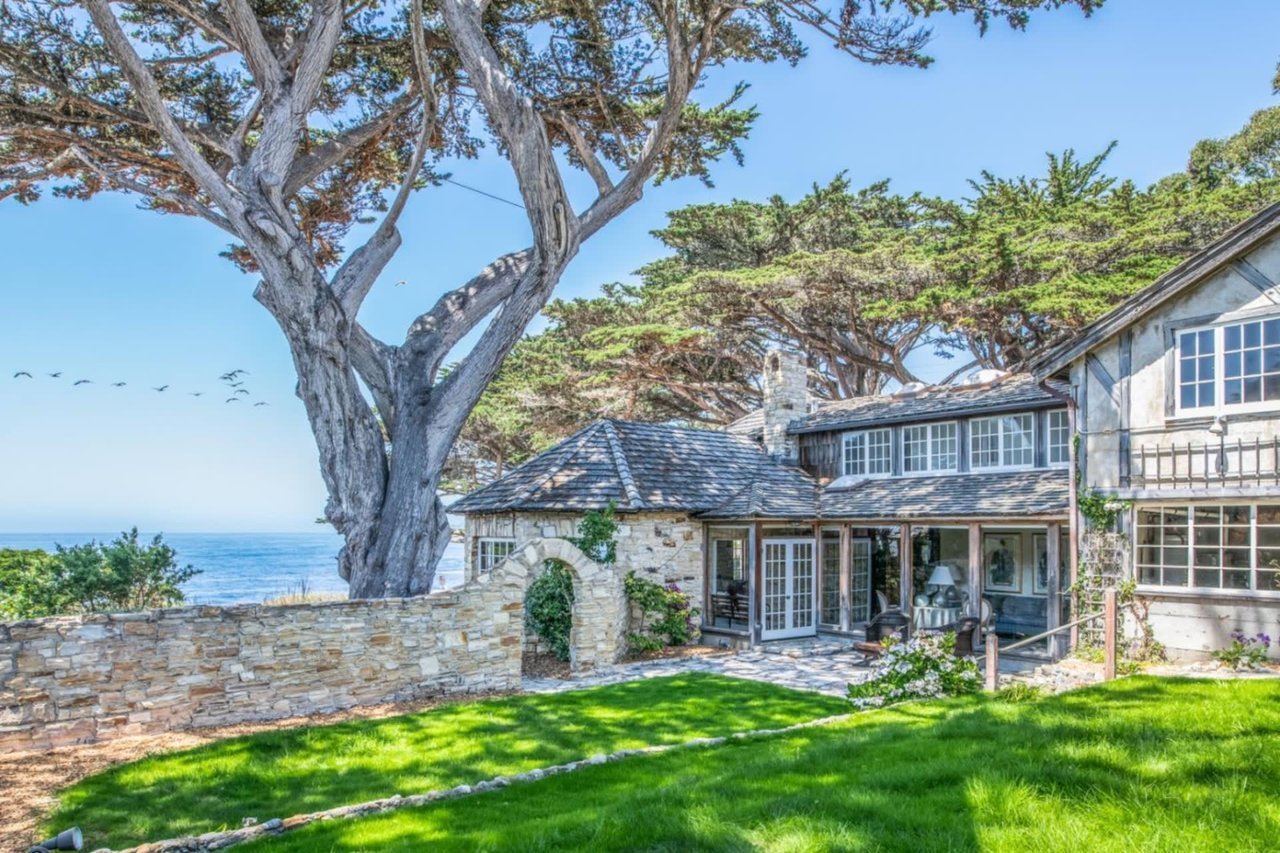
Monterey does not read like a one-style town. Its historic core reflects Spanish, Mexican, and early American periods, and nearby residential neighborhoods preserve growth from roughly 1884 to 1945.
That means you may see early adobe influences, revival-era stucco homes, and later simplified cottages within a short walk or drive. In Monterey, that mix is not a mismatch. It is part of the city’s character.
The City of Monterey’s historic context statements also note an important detail for anyone browsing homes: a building does not need every textbook feature to express a style. Sometimes a roofline, balcony, porch, window pattern, or exterior material tells you most of what you need to know.
Monterey Colonial stands out
Among Monterey’s historic home styles, Monterey Colonial is the most locally distinctive. California State Parks identifies the Larkin House, built in 1835, as the prototype for Monterey Colonial architecture and one of the area’s best examples of the style.
This style developed as a hybrid of Spanish or Mexican and Anglo building traditions. That blended background helps explain why it feels so rooted in Monterey rather than copied from somewhere else.
Monterey Colonial features to spot
If you are trying to recognize a Monterey Colonial home in photos or in person, look for a few standout elements:
- Two-story form
- Wide, side-gabled shape
- Cantilevered upper balcony or veranda
- Wood-frame windows
- Paired shutters
- Interior hallways and stairs
- Adjoining patio or walled area
- Tile or shingle roof finishes
The balcony is often the fastest clue. In many cases, that upper-level outdoor space gives the home its signature silhouette.
Why Monterey Colonial feels so local
Monterey Colonial homes often feel well suited to coastal living because of their verandas, patios, and sheltered rooflines. Those features create shaded outdoor space and support an easy indoor-outdoor rhythm.
The style also tends to feel restrained rather than overly ornate. For many buyers, that balance of simplicity and presence fits the relaxed, historic atmosphere that defines Monterey.
Spanish Colonial Revival and Mission Revival
Another major part of Monterey’s streetscape comes from the revival styles that spread through California in the early 20th century. In Monterey, local survey documents describe many of these homes as modest and vernacular, rather than elaborate showpieces.
That matters because it helps explain why a home can still read as Spanish-influenced even when the details are fairly simple. The style may show up through materials, entry shapes, and roof forms more than grand decoration.
Spanish Colonial Revival features
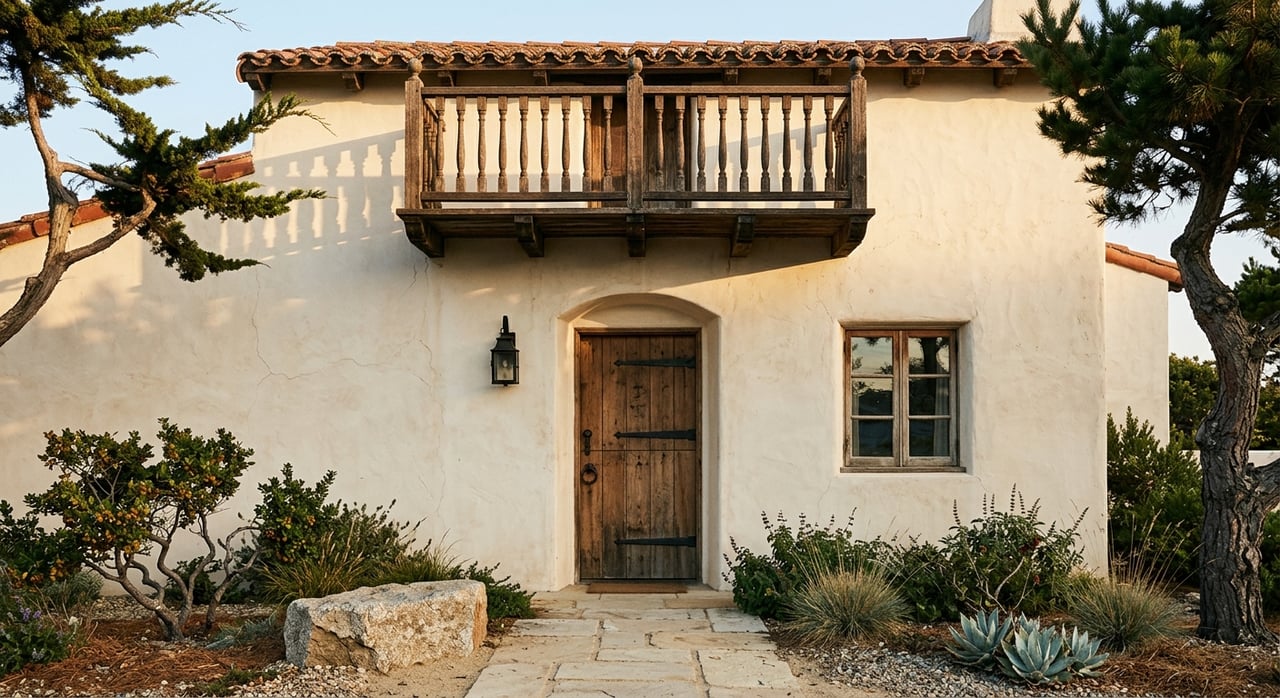
Spanish Colonial Revival is one of the most prevalent residential styles in 20th-century California. In Monterey, common character-defining features include:
- Stucco cladding
- Clay tile roof cladding
- Arched or rectangular window openings
- Partial-width porches
- Recessed entries, often with arches
- Stepped or sloped parapets
- Flat or low-pitched gabled roofs
- Tile decorative elements
- Asymmetrical façades
If you are comparing listing photos, stucco walls and clay tile roofing are often the quickest starting points. Then look for arches, recessed porch space, and a less formal front elevation.
Mission Revival features
Mission Revival is the earlier related style that helped set the stage for Spanish Colonial Revival. The style draws on California’s mission heritage and is associated with thick white stucco walls, red clay roofs, bell towers, and deep openings.
In Monterey, simplified versions may include Spanish tile roofs, raised plaster ornament, arched porches, and arched picture windows. You may not see every feature on every home, but the overall effect is often easy to recognize.
Why these homes suit Monterey
Spanish and Mission-inspired homes often feel at home in Monterey because stucco, tile, arches, and recessed outdoor areas create a sheltered coastal atmosphere. Those elements soften sunlight and shape porches or patios into usable outdoor space.
For buyers, that can translate into a house that feels warm, grounded, and connected to the landscape. For sellers, those same details often become central to how a home presents in photography and private showings.
Other historic styles you may see
Monterey’s historic character goes well beyond adobe and stucco. The city’s context statements show that older neighborhoods also include Victorian-era homes, Craftsman bungalows, and Minimal Traditional houses.
These styles broaden what “classic Monterey” can look like. That is helpful if you are searching for a home with period character but not necessarily Spanish or colonial detailing.
Queen Anne and Shingle Style homes
Queen Anne and Shingle Style Victorians bring a more decorative look to the mix. Common features include:
- Asymmetrical façades
- Turrets or towers
- Bay windows
- Ornate trim
- Wraparound porches
These homes can stand out quickly in a streetscape because of their vertical emphasis and decorative woodwork. In Monterey, they add another layer to the city’s architectural story.
Craftsman bungalow details
Craftsman homes usually feel more grounded and horizontal. Typical features include:
- Low, horizontal profiles
- Broad eaves
- Exposed rafters or purlins
- Grouped windows
For many buyers, Craftsman homes offer historic character in a more understated package. Their emphasis on structure and proportion often gives them a calm, practical appeal.
Minimal Traditional simplicity
Minimal Traditional houses represent a later, simplified period of design. In Monterey, these homes are described with low-slung stucco walls, shallow eaves, and reduced ornament.
They are less decorative than Victorian or revival homes, but they still contribute to the city’s layered visual identity. If you prefer cleaner lines and fewer embellishments, this style may stand out to you.
How to read a home’s style fast
When you are touring homes or scrolling listings, you do not need to be an architectural historian to identify the basics. A few visual cues can help you separate one style from another quickly.
Best style-spotting clues
Focus on these comparison points:
- Height and massing: Is the home one story or two?
- Balcony or veranda: Is there a prominent upper-level outdoor space?
- Exterior material: Does it read as stucco or wood siding?
- Roof finish: Are you seeing tile or shingles?
- Window rhythm: Are the windows symmetrical, grouped, arched, or varied?
- Ornament level: Is the design restrained or decorative?
A two-story home with a cantilevered balcony may point toward Monterey Colonial. A stucco home with tile roofing and arches may suggest Spanish Colonial Revival or Mission Revival. A low bungalow with broad eaves and exposed rafters often signals Craftsman.
Why style matters for buyers and sellers
Historic style is not just aesthetic. In Monterey, planning documents describe a preservation framework that treats historic resources as important to the city’s character, and certain resources are reviewed through historic zoning and preservation processes.
For sellers, that means original exterior elements may carry real weight in how a property is understood. Rooflines, balconies, windows, stucco, porches, and trim can matter more than cosmetic changes when a home’s style is being evaluated.
For buyers, style awareness helps you ask sharper questions and better understand what makes a property distinctive. It can also help you see beyond finishes and focus on the architectural bones that give a home lasting appeal.
Seeing Monterey architecture in context
If you want to experience these styles beyond listing photos, Monterey’s historic core offers a practical place to start. Monterey State Historic Park includes landmark buildings such as the Custom House, Larkin House, and Stevenson House, and house tours can help you see preserved examples in person.
That kind of context is useful whether you are drawn to historic homes for their design, their provenance, or their sense of place. In a market where architecture and setting often go hand in hand, understanding the style can deepen your read on the property itself.
Monterey’s historic homes tell a story through form, materials, and detail. If you are evaluating a legacy property, preparing a distinctive home for the market, or searching for a residence with authentic coastal character, a style-informed approach can make every step more intentional. For tailored guidance on Monterey Peninsula real estate, connect with Jessica Canning.
FAQs
What makes Monterey Colonial different from Spanish Colonial Revival in Monterey?
- Monterey Colonial is typically identified by a two-story form with a cantilevered upper balcony or veranda, while Spanish Colonial Revival is more often recognized by stucco walls, clay tile roofing, arches, and asymmetrical façades.
Which historic home style is most closely tied to Monterey, California?
- Monterey Colonial is the style most closely associated with the city, with the Larkin House identified by California State Parks as the prototype.
What architectural details should buyers look for in Monterey listing photos?
- Focus on height, balcony presence, exterior materials, roof type, window patterns, and how much ornament the home has.
Are Victorian and Craftsman homes part of Monterey’s historic housing mix?
- Yes. City context statements show Monterey includes Queen Anne and Shingle Style Victorians, Craftsman bungalows, and Minimal Traditional homes alongside colonial and revival styles.
Why do exterior details matter for historic homes in Monterey?
- Monterey’s preservation framework treats historic resources as important to the city’s character, so exterior elements like rooflines, balconies, windows, stucco, porches, and trim can be especially important when a home’s style is evaluated.